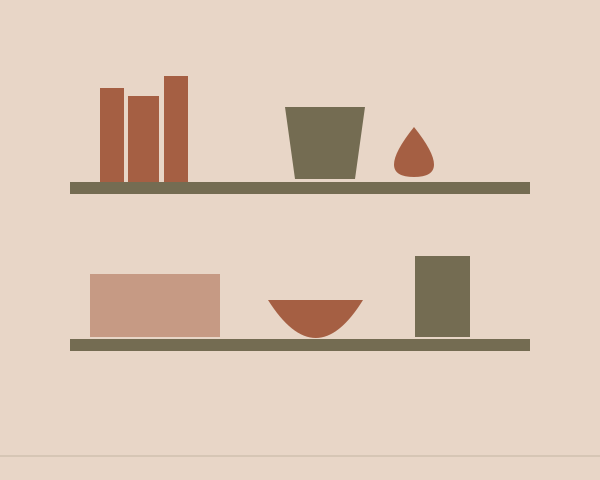
Shelves sit between storage and display. They hold the things we need, but they also shape how a room feels. A useful shelf makes those two jobs work together without turning each object into a carefully maintained exhibit.
Begin with what belongs here
Take everything off one shelf and group the items by use. Books, bowls, papers, and keepsakes ask for different kinds of access. Decide which of those groups genuinely belongs in this room.
Keep frequently used items within comfortable reach. Save higher or lower shelves for things you do not need every day. This simple decision often improves the arrangement more than any styling rule.
Give small things a boundary
Loose small objects are hard to find and easy to scatter. A shallow tray, a box, or a basket can give them a shared home. Choose a container that opens easily enough that putting things away feels natural.
Do not hide something merely to make the shelf look cleaner. A container works when it makes an existing routine simpler, not when it creates a second place to search.
Leave a little space
An empty patch on a shelf is useful. It lets you remove a book without disturbing everything beside it and gives you somewhere to place an item temporarily. It also makes different materials easier to see.
There is no exact proportion to aim for. Step back from the shelf and notice whether each group is legible. If the arrangement feels crowded, remove a whole group before rearranging individual pieces.
Let use shape the arrangement
Live with the shelf for a few days. The places where items repeatedly collect are clues about how the room works. Move a tray toward that place rather than asking everyone to remember a less convenient system.
A shelf can change with a season, a hobby, or a new book. Leave enough flexibility for ordinary life to alter the composition.