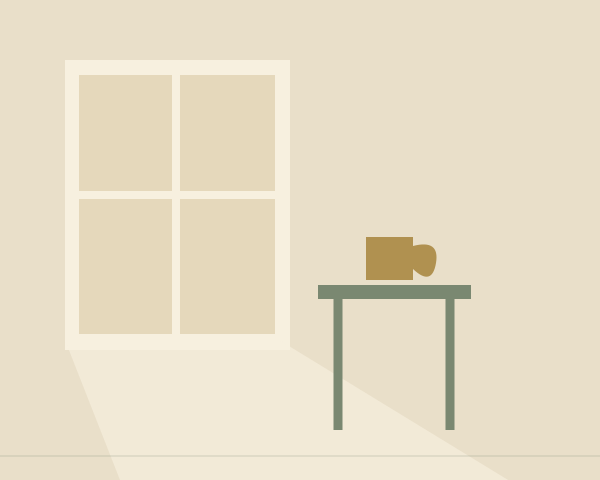
Rooms change slowly enough that we stop noticing them. Morning light offers a simple reason to look again. It moves across a wall, catches the edge of a cup, and makes an ordinary surface feel briefly unfamiliar.
Notice before you arrange
Spend a few minutes in the room without moving anything. Look at where the light arrives and how far it travels. A pale wall reflects it differently from a dark tabletop, and a curtain can turn a sharp outline into a soft patch.
This is an observation rather than a task. You do not need to take a photograph or make the room more beautiful. The point is to notice what is already happening.
Make one place easy to use
If you enjoy sitting in that light, clear a single place for yourself. It might be one end of the kitchen table or a chair beside the door. Keep the preparation small enough to repeat on a busy morning.
A cup and a clear surface are enough. Adding more objects can turn a quiet moment into another arrangement that needs attention.
Keep the ritual flexible
Clouds, seasons, and different schedules will change the light. A routine that depends on a perfect sunrise will be hard to maintain. Look for a familiar moment rather than a particular color or time.
On a dull morning, notice the room’s softer edges. On a bright one, notice the shadows. Both offer something to see.
Carry the attention forward
You can leave after a few minutes. A small ritual does not need to compete with breakfast, work, or the rest of the household. It works because it gives a familiar day a deliberate beginning.
Later, you may find yourself noticing other details: the sound of a window opening, a well-used handle, the way the table changes in afternoon light. That is enough.